Chromium Picolinate: Four Reported Benefits, Limited Evidence
10/04/2026 / By Sterling Ashworth

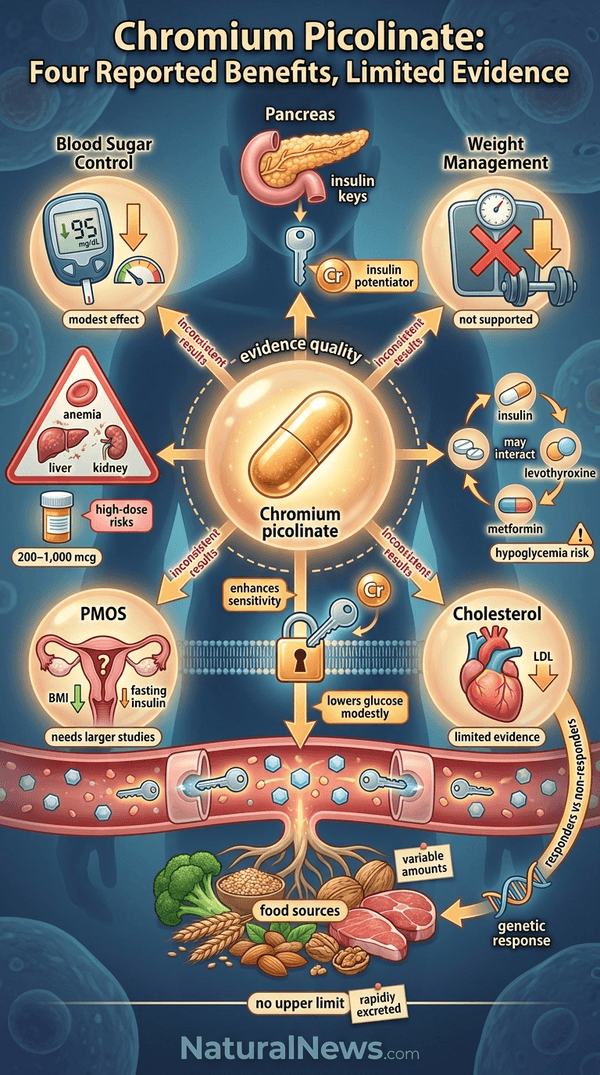
Chromium picolinate is a widely sold over-the-counter mineral supplement marketed for blood sugar control, weight management, polyendocrine metabolic ovarian syndrome (PMOS, formerly known as polycystic ovary syndrome or PCOS) and cholesterol improvement.
The supplement is a form of trivalent chromium, a trace mineral that researchers say helps insulin function properly. According to a report published on NaturalNews.com, chromium is “widely marketed for blood sugar control, weight loss, and athletic performance, but researchers remain divided on whether it provides real health benefits” [1].
Health officials and published reviews state that evidence for these four benefits varies, and that more research is needed before chromium picolinate can be recommended as a primary treatment for any condition. Common dosages studied range from 200 to 1,000 micrograms daily, according to a dietary supplement guide by Shawn M. Talbott [2]. The supplement is generally sold without a prescription, and public interest in it has grown alongside broader interest in natural approaches to metabolic health [3].
Blood Sugar Control
Chromium is described in nutrition literature as an essential mineral that helps insulin function properly. “When insulin works well, blood sugar remains balanced,” one 2008 report on NaturalNews.com stated, noting that insulin’s role is to remove sugar from the bloodstream and transport it to tissues for energy [4]. According to researchers, chromium acts as what one analysis called “an insulin potentiator, making the body’s own insulin production go further” [5].
Multiple studies suggest that chromium picolinate supplements may slightly lower fasting blood sugar and HbA1c levels in people with diabetes. A 2006 study reported on NaturalNews.com found that daily supplementation with 1,000 micrograms of chromium picolinate, in combination with a common oral anti-diabetic medication, improved insulin sensitivity and glucose control better than the medication alone in patients with Type 2 diabetes [6].
A 2003 study from Isala Clinics and University Hospital Groningen in the Netherlands showed that 1,000 micrograms daily significantly reduced blood sugar levels in people with poorly controlled Type 2 diabetes who use insulin. However, a subsequent study from Louisiana State University indicated that response may be partly genetically mediated, meaning not all patients respond [7]. The response to chromium varies from person to person, and researchers say it may be more beneficial for people with severe insulin resistance or uncontrolled blood sugar. [7].
Weight Loss and PMOS Management
Chromium’s interaction with insulin has been claimed to support weight loss and lean muscle mass. Nutritional author Jonny Bowden wrote that he recommends chromium “for anyone I suspect has problems with blood sugar and/or insulin resistance or who is chronically unable to lose weight,” explaining that chromium makes insulin more effective at moving sugar out of the bloodstream and into cells [8]. However, the data are not considered meaningful enough to recommend chromium picolinate as a weight-management tool, according to published reviews [1].
PMOS is a hormonal condition characterized by acne, irregular periods, and weight gain. Studies of 200 to 1,000 micrograms of chromium picolinate daily in women with PMOS suggest the supplement may lower body mass index and fasting insulin levels, but researchers found no clear effect on blood sugar, and more data from larger groups of people is needed before conclusions can be drawn.
“More data from larger groups of people is needed,” one report stated regarding chromium use in PMOS [7]. A 2025 report noted that early studies from the 1950s were flawed and that modern research shows inconsistent results [1].
Cholesterol Effects and Dietary Sources
Research has linked dyslipidemia, or unhealthy blood lipid levels, to low chromium status. Daily chromium supplementation may lower triglycerides and improve total and HDL cholesterol levels, according to researchers, though more studies are necessary to confirm these effects [9]. A study presented at the 68th Annual Scientific Session of the American Diabetes Association compared niacin-bound chromium with chromium picolinate and found the niacin-bound form provided significantly more heart health benefits in obese, diabetic rats, suggesting that not all chromium forms behave identically [9].
Chromium occurs naturally in a range of foods. A 2006 review in the Journal of Hazardous Materials listed dietary sources including brewer’s yeast, liver, cheese, whole grain breads and cereals, and broccoli, and noted that chromium picolinate is “its most soluble form” and is popular with bodybuilders [10]. Other commonly cited sources include grape juice, ham, whole wheat English muffins, orange juice, beef, and lettuce.
The amount of chromium in produce depends on the soil and water where it was grown, and stainless steel cookware can increase the chromium content of foods during preparation [10]. Because bioavailability requires that metals remain soluble through digestion and absorption, the total chromium content of a food does not necessarily reflect how much the body can use, according to a 2000 analysis in the Journal of Agricultural and Food Chemistry [11].
Safety, Dosage and Drug Interactions
Chromium picolinate is generally considered safe for healthy adults at recommended doses, but data remain limited. People with kidney or liver disease should be cautious, according to supplement guides, because impaired organ function may affect how chromium is cleared from the body. A guide by Shawn M. Talbott noted that intakes above the recommended dosage should be avoided, citing case reports in which chromium picolinate supplementation increased blood chromium levels to two to three times normal and caused anemia, blood abnormalities, liver dysfunction and renal failure [2].
Potential interactions have been reported with insulin, levothyroxine, and metformin, and officials advise consulting a doctor before supplementing [2]. Reported side effects include bloating, mood changes, headaches, insomnia, and upset stomach. Large doses have been linked to anemia, dermatitis, liver dysfunction, low blood sugar, kidney failure, rhabdomyolysis, thrombocytopenia and unintended weight loss [2]. In an animal study conducted by the U.S. Department of Agriculture, rats fed a diet rich in chromium picolinate for 24 weeks showed no adverse side effects [2].
No upper intake limit has been established for chromium, and excess trivalent chromium is excreted quickly by the body, according to nutrition references. “It’s unlikely to cause toxicity,” one supplement source stated regarding trivalent chromium at typical doses [12]. Health officials continue to recommend that individuals with metabolic conditions consult a qualified practitioner before beginning any supplement regimen.
References
- Belle Carter. “Chromium supplements Essential nutrient or overhyped trend”. NaturalNews.com. October 14, 2025.
- Shawn M. Talbott. “A guide to understanding dietary supplements”.
- NaturalNews.com. “Powerful natural supplements to stabilize blood sugar”. NaturalNews.com. March 30, 2026.
- NaturalNews.com. “Only One Chromium Supplement Helps People with”. NaturalNews.com. December 05, 2008.
- NaturalNews.com. “Chromium prevents diabetes by improving insulin”. NaturalNews.com. November 05, 2009.
- NaturalNews.com. “Supplementation with Chromium Picolinate Improves Glycemic Control”. NaturalNews.com. October 09, 2006.
- “The Gale encyclopedia of alternative medicine”.
- Jonny Bowden. “Living low carb controlled carbohydrate eating for long term weight loss”.
- NaturalNews.com. “New Study Shows Niacin-Bound Chromium Benefit”. NaturalNews.com. November 11, 2008.
- Mohan, C.U. Pittman Jr.. “Activated carbons and low cost adsorbents for remediation of tri- and hexavalent chromium from water”. Journal of Hazardous Materials B137. 2006.
- “Plants as a natural source of concentrated mineral nutritional supplements”. Journal of Agricultural and Food Chemistry. 2000.
- Life Extension Foundation. “Disease Prevention and Treatment”.
Explainer Infographic
Submit a correction >>
Tagged Under:
chromium, chromium picolinate, chromium-binding protein, deception, diabetes, diabetes cure, diabetes science news, diet, health science, metabolic health, natural cures, natural remedies, nutrients, polycystic ovary syndrome, polyendocrine metabolic ovarian syndrome, prevent diabetes, research, supplement, supplements.report, weight loss, weight management, women's health
This article may contain statements that reflect the opinion of the author
RECENT NEWS & ARTICLES