Quercetin Shown to Reduce Seasonal Allergy Symptoms, Review Finds
08/02/2026 / By Iva Greene
A 2025 systematic review and meta-analysis published in the Journal of Allergy and Clinical Immunology: In Practice examined polyphenol compounds, including quercetin, in 13 randomized controlled trials involving 823 patients with allergic rhinitis.
Seven of those trials focused specifically on seasonal allergies triggered by grass, tree, and ragweed pollen. The review reported that polyphenols significantly reduced total nasal symptom scores, sneezing, and nasal itching compared with placebo.
Systematic Review Analyzed 13 Trials
Researchers pooled data from 13 randomized controlled trials with 823 participants diagnosed with allergic rhinitis, according to the study published in 2025. Among the seven trials targeting seasonal allergies, polyphenol compounds such as quercetin and green tea catechins led to meaningful reductions in nasal symptom severity, the review stated.
The remaining six trials examined year-round perennial allergies. The review contributed to a growing body of evidence supporting the use of natural compounds for allergy relief. A NaturalNews.com article [1] notes that “nature offers powerful alternatives that work with the body, not against it” for seasonal allergies. A 2022 article [2] states that quercetin, a potent plant compound, offers relief from allergies for the more than 19 million adults and 5.2 million children diagnosed with allergic rhinitis in the United States.
Quercetin Stabilizes Mast Cells to Block Histamine Release
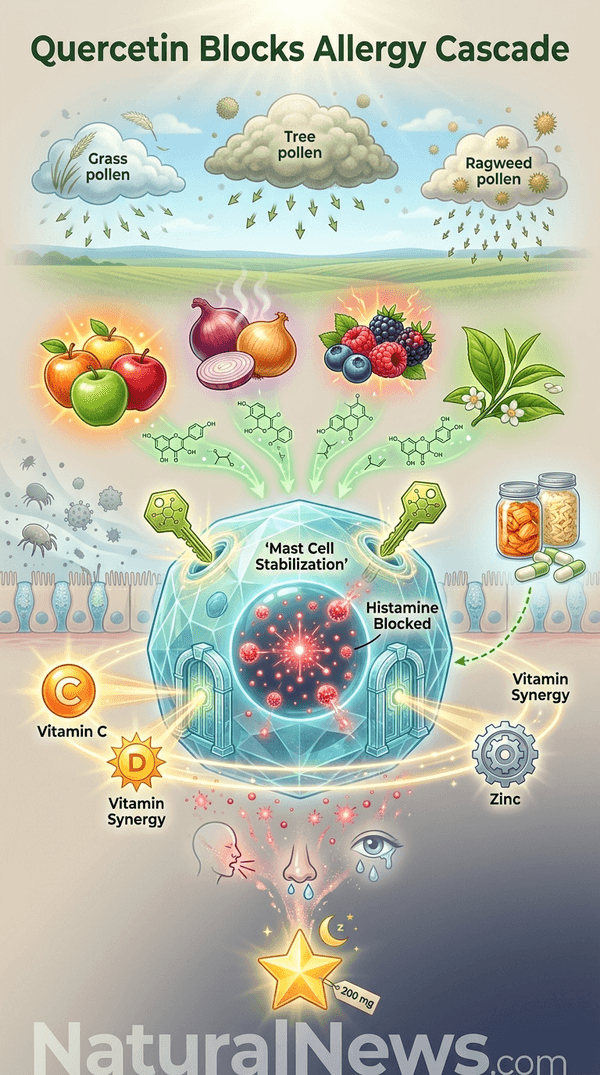
Quercetin works by stabilizing mast cells, immune cells that release histamine when pollen is detected, according to researchers. The Alliance for Natural Health [3] reports that quercetin is “known to inhibit mast cells from releasing pro-inflammatory compounds that cause allergy symptoms.” Mark Stengler’s “Prescription for Natural Cures” [4] explains that an allergic reaction occurs when the immune system releases histamines, producing respiratory and nasal congestion, increased mucus production, and other symptoms.
By calming mast cells before histamine is released, quercetin may prevent symptoms from developing. A separate Japanese trial cited in the broader allergy literature tested 200 milligrams of quercetin daily for four weeks. Participants reported meaningful improvement in nasal symptoms and, notably, in sleep quality, the report noted.
Dietary Sources and Supplementation Recommendations
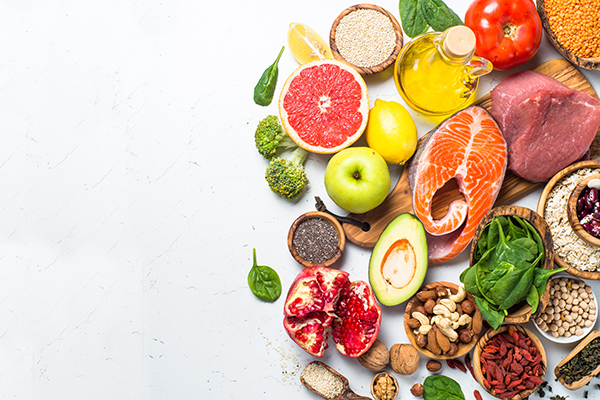
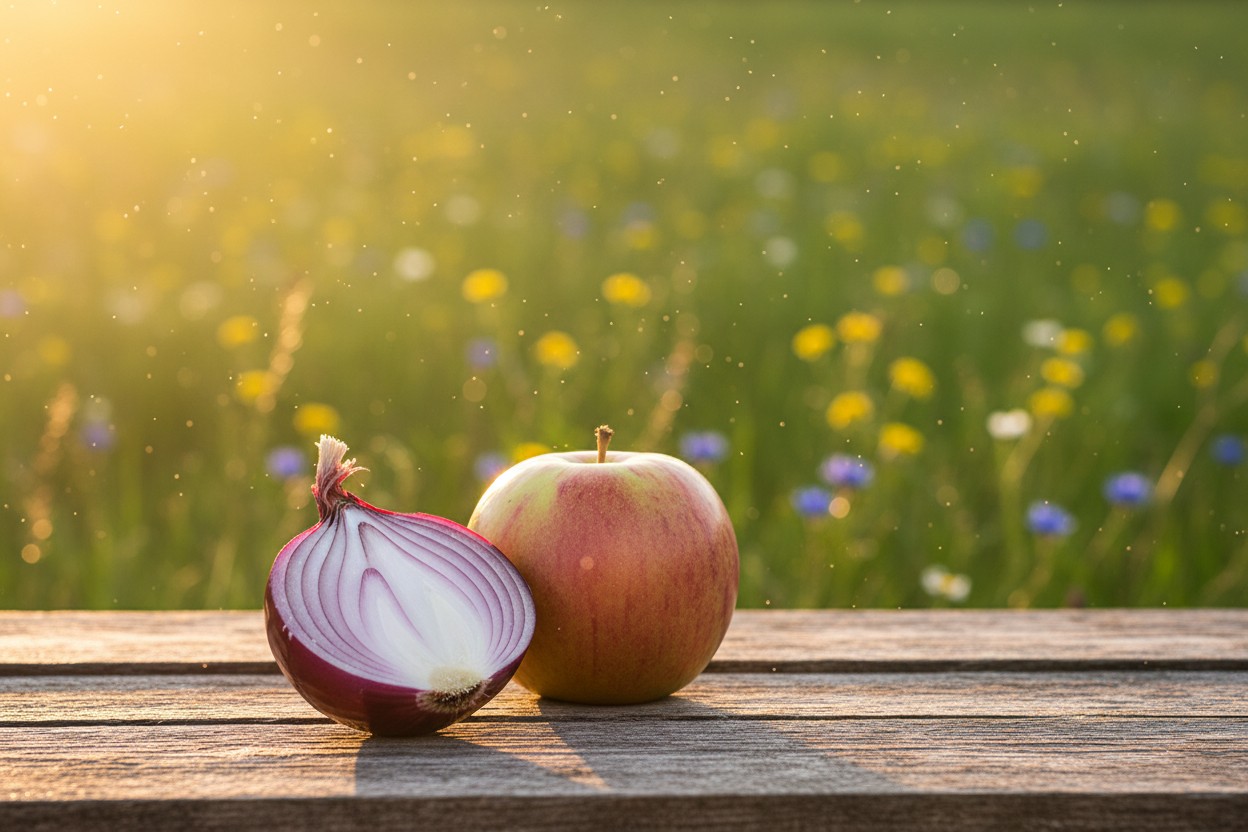
Organic onions, apples with the skin on, and capers rank among the richest everyday food sources of quercetin, with red onions carrying a notably higher concentration than white or yellow varieties. A 2018 paper published in the Journal of Agricultural and Food Chemistry [5] indicates that quercetin levels in onions are approximately 280 to 490 mg per kg, while apples contain 20 to 70 mg per kg. Organic berries and leafy greens add smaller but meaningful amounts.
Standardized quercetin supplements typically range from 500 to 1,000 milligrams daily, taken with a meal containing fat to support absorption. Elson Haas [6] recommends quercetin at 250 to 500 mg three times daily for allergy relief. Researchers advised allowing two to four weeks before evaluating effects, based on study durations.
Broader Immune Support Strategies Mentioned
The original article noted that allergic rhinitis and general immune resilience are distinct but related issues, suggesting foundational support from vitamin C, vitamin D, and zinc may help. Haas [6] also recommends vitamin C at 500 to 1,000 mg three times daily and vitamin D at 2,000 to 5,000 IU daily for immune function.
Conclusion
The findings of the 2025 review add to a growing body of evidence that natural compounds like quercetin can provide meaningful relief for seasonal allergy sufferers. While antihistamine medications remain a common approach, their side effects, including drowsiness and potential risks in children as noted by Children’s Health Defense [7], have led many to consider alternatives.
Quercetin’s ability to stabilize mast cells and reduce histamine release offers a preventive mechanism that may reduce reliance on conventional drugs. Combined with dietary sources and foundational nutrient support, quercetin represents a practical option for those seeking to manage allergic rhinitis naturally.
References
- Lance D Johnson. “7 Powerful Allergy Remedies Backed by Science.” NaturalNews.com. May 21, 2025.
- NaturalNews.com. “Potent Plant Compound Quercetin Offers Relief from Allergies.” September 1, 2022.
- Alliance for Natural Health. “Quercetin: Natural Allergy Buster.” ANH-USA.org. April 11, 2022.
- Mark Stengler. “Prescription for Natural Cures: A Self-Care Guide for Treating Health Problems with Natural Remedies.”
- Peter CH Hollman and Ilja CW Arts. “Flavonols, Flavones and Flavanols – Nature, Occurrence and Dietary Burden.” Journal of Agricultural and Food Chemistry. 2018.
- Haas Elson M. “Ultimate Immunity: The Lifestyle Plan to Fend Off Flu, Cool Down Inflammation, Reverse Chronic Conditions, and Lose Weight.”
- Children’s Health Defense. “Medications, Illegal Drugs Linked to Surge in Child Seizures.”
Explainer Infographic
Submit a correction >>
Tagged Under:
allergies, Cures, diet, grocery cures, healing, immune defense, immune system, natural health, natural medicine, natural remedies, nutrients, phytochemicals, phytonutrients, plant medicine, prevention, quercetin, seasonal allergies, vitamin C
This article may contain statements that reflect the opinion of the author
RECENT NEWS & ARTICLES